



















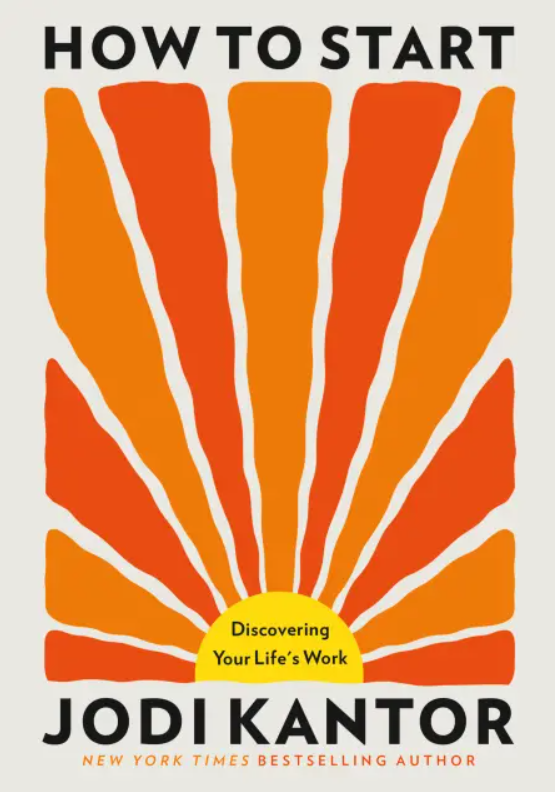
Are you ready to join the real world, but not sure how? Jodi Kantor, a New York Times investigative reporter, believes this requires an entrepreneurial mindset, serious introspection of your craft, and an examination of the world’s needs.
Kantor spoke last month at the “Women Designing the Future Conference,’’ drawing from her forthcoming book How to Start: Discovering Your Life’s Work, where she aimed to help students find their footing in the job market and greater world.
“An important starting point is craft,” Kantor said. Craft is related to your skillset and what you choose to study. However, according to Kantor, there is no “golden ticket’’ academic major. She reminded the audience about the craze to learn Japanese in the 1990s, genetics in the 2000s, and Mandarin and computer science in the early 2010s, all of which were quickly replaced by newer, “hotter’’ areas of study.
Instead, she encourages us to devote time to self-reflect, learn about our preferences, identify global needs, and study how we might address such needs. With an understanding of both craft and need, Kantor argues, you are ready to start making decisions about what to dedicate your time and effort to. “The big idea here is that the best careers are based on combining craft and need,” she said.
Kantor also addressed issues of fear and self-doubt. Audience members used their phones to respond to a poll that asked the question: “What is your biggest fear about starting your career?” Within minutes, a word cloud revealed the audience’s top fears: disrespect, inexperience, and failure. Kantor acknowledged that the job market can be cruel at times, but the best antidote to that is craft. “People who have craft get respected,” she said. Noting all the negativity on the screen, she reminded the students to listen to and favor their positive emotions, labeling their negative emotions as unreliable guides. “Negative emotions can be very deceptive because they reflect fear, not reality,” she added.
The presentation closed with a Q&A session that allowed students to voice the concerns displayed on the screen. One student asked about authenticity: “Is it better to be yourself, or should you try to be the perfect candidate?” Kantor gave a nuanced response, stating that people who are most successful do a little of both. She went on to say that “there’s the basic footprint of what your job is that you have to meet in order for you to be employable, but often the thing that will make you better than just employable, the thing that will make you special or successful or insightful or a real contributor in the workplace, is a special sauce, right?” That special sauce may be your craft.
Kantor left students with more than career advice; she gave them a framework for thinking about work through an age of uncertainty. “Life is like a table,” she said. “Craft is one of the legs; build your craft. Need is one of the legs; pay attention to what the world needs. Family is a leg, friends are a leg, colleagues are a leg, and your career as well. They work in tandem to hold the table upright.”
For students facing an increasingly demanding job market, Kantor’s message was that although no one can control the future, you can still choose how you begin.


